 Review
The casino industry in 2026 has evolved beyond the traditional “online vs offline” model. Today, there are four main types of casinos: digital, physical, Web3, and technology-driven platforms.
Each type operates differently in terms of technology, legality, user experience, and financial systems. Understanding these differences helps you choose the right platform based on your needs—whether that’s convenience, privacy, social interaction, or innovation.
The 4 Major Types of Casinos (Overview)
| Type | Where It Operates | Best For | Key Feature |
|---|---|---|---|
| Digital Casinos | Apps & websites | Convenience players | Play anytime |
| Physical Casinos | Resorts, ships | Travel & luxury | Real-world experience |
| Web3 Casinos | Blockchain platforms | Crypto users | Transparency |
| Tech-Driven Casinos | VR & skill-based | Tech-first users | Immersive gameplay |
Each category serves a distinct purpose. Digital casinos prioritize access, physical casinos focus on experience, Web3 emphasizes trust and control, and technology-driven platforms introduce new gameplay formats.
1. Digital Casinos (Online & App-Based)
Digital casinos are the most widely used format. They operate through websites and mobile apps, allowing players to access games from anywhere with an internet connection.
Types of Digital Casinos
a. Regulated iGaming Casinos
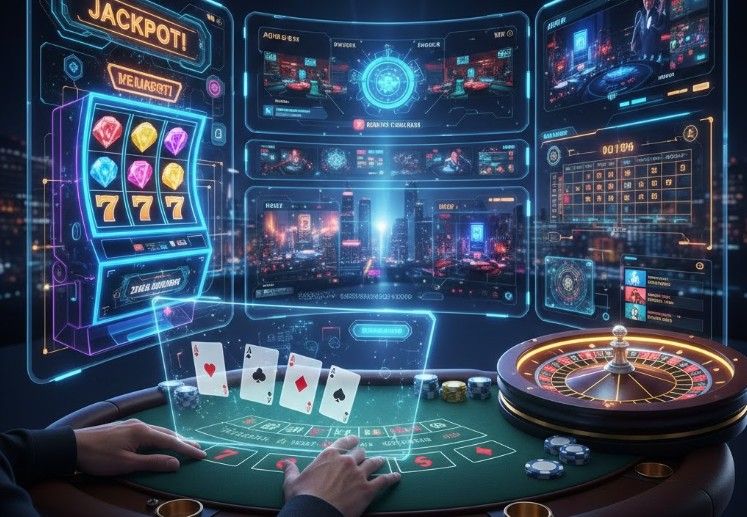
These platforms are licensed by government authorities and follow strict compliance rules. Players must complete identity verification (KYC) before depositing or withdrawing money.
Key features:
- Secure payment systems and data encryption
- Fair gameplay using Random Number Generators (RNG)
- Player protection tools (deposit limits, self-exclusion)
- Tax compliance handled by the platform
b. Sweepstakes Casinos
These use virtual currency instead of real money. Players receive free credits or buy promotional packages, and winnings may be redeemed as prizes.
Key features:
- No direct real-money gambling
- Operate in restricted regions
- Low legal risk
- Social features like leaderboards
c. Offshore Casinos
Licensed in jurisdictions like Curaçao or Malta, these platforms often provide fewer restrictions but also less legal protection.
Key features:
- Higher bonuses and fewer limits
- Crypto and multi-currency support
- Faster withdrawals
- Medium to high legal risk depending on location
According to Mordor Intelligence, the online gambling market is projected to reach $168.71 billion by 2031. (Source: Mordor Intelligence)
Summary: Digital casinos are ideal for players who want speed, accessibility, and a wide range of games. However, safety depends heavily on whether the platform is regulated.
2. Physical Casinos (Land-Based)
Physical casinos provide in-person gambling experiences and remain popular for their atmosphere, entertainment, and social interaction.
Types of Physical Casinos
a. Integrated Resort Casinos
These are large-scale destinations combining casinos with hotels, shopping centers, restaurants, and entertainment venues.
Key features:
- Luxury experience with multiple amenities
- High security and strict regulation
- Revenue from both gaming and non-gaming services
b. Tribal & Regional Casinos
Operated by local or tribal authorities, these casinos often follow independent regulatory systems. (Source: ebsco)
Key features:
- Community-focused operations
- Sports betting and local promotions
- Lower operational costs than resorts
c. Offshore Physical Casinos
Offshore physical casinos include riverboat and cruise casinos that operate on rivers or in international waters. These casinos use their location to legally offer gambling in regions where land-based casinos may be restricted.
Key features:
- Gambling combined with travel
- Multiple currency support
- 24/7 operation while at sea
Summary: Physical casinos focus on experience rather than convenience. They are best suited for players who enjoy travel, luxury, and face-to-face interaction.
3. Web3 & Crypto Casinos
Web3 casinos use blockchain technology and cryptocurrencies, eliminating the need for traditional accounts. Players simply connect a crypto wallet to start playing.
Key Features:
- No KYC or identity verification
- Full control of funds via personal wallet
- Instant deposits and withdrawals
- Lower transaction fees
- Anonymous gameplay
- Provably Fair Systems
Provably Fair Crypto Casinos
A major advantage of Web3 casinos is provable fairness. Games use cryptographic algorithms (hash) that allow players to verify results independently.
How it works :
- A hashed result is generated before gameplay
- A unique seed is provided to the player
- Both values can be used to verify fairness
Benefits:
- Transparent outcomes
- No reliance on third-party auditors
- Trust built through code, not institutions
Summary: Web3 casinos are ideal for users who value privacy, speed, and transparency. However, legal clarity is still developing in many countries.
4. Technology-Driven Casinos
This category includes emerging casino formats powered by advanced technologies such as virtual reality and skill-based gaming systems.
Types of Tech-Driven Casinos
a. VR & Metaverse Casinos
These platforms create immersive virtual environments where players interact using avatars.
Key features:
- 3D casino worlds
- Real-time interaction with players
- Voice chat and gesture controls
- Virtual VIP rooms and social spaces
b. Skill-Based Casinos
These combine gaming skill with gambling mechanics. Outcomes depend partly on player performance.
Key features:
- Game-like interfaces (strategy, shooting, interactive slots)
- Leaderboards and tournaments
- Player decisions influence results
Summary: Technology-driven casinos are designed for modern users, especially those familiar with video games. They prioritize engagement and innovation over traditional gameplay.
Key Differences Between Casino Types
1. Financial Systems
- Digital & physical casinos: Use fiat currency (cards, bank transfers, e-wallets)
- Web3 casinos: Use cryptocurrency wallets
2. Trust Mechanisms
- Traditional casinos: Regulated by authorities and audited
- Web3 casinos: Use blockchain transparency and provable fairness
3. Player Experience
- Digital: Fast and efficient gameplay
- Physical: Social and immersive environment
- Tech-driven: Interactive and game-like experiences
Which Type of Casino is Best for You?
Your choice depends on your priorities:
- Convenience: Digital casinos
- Luxury and travel: Physical casinos
- Privacy and control: Web3 casinos
- Social interaction: VR or live casinos
- Skill-based gameplay: Tech-driven casinos
- No financial risk: Sweepstakes casinos
Legal Considerations
Casino legality varies based on location and platform type.
- Physical casinos require government approval
- Regulated digital casinos must follow regional laws
- Offshore casinos may operate in legal gray areas
- Web3 casinos are still largely unregulated
- Sweepstakes casinos operate legally in restricted regions using virtual currency
In India, regulations are evolving, with stricter rules on online gaming platforms, licensing, and player protection.
Important: Always check local laws before using any casino platform to avoid legal risks.
Conclusion
In 2026, the casino industry is more diverse than ever. The four main types—digital, physical, Web3, and technology-driven—each offer unique advantages.
Digital casinos provide convenience, physical casinos deliver real-world experiences, Web3 platforms offer transparency and control, and technology-driven casinos introduce innovative gameplay.
Choosing the right type depends on what matters most to you: accessibility, privacy, social interaction, or advanced features. Understanding these differences helps you make informed decisions and enjoy a safer gaming experience.
Frequently Asked Questions
Ques 1. What are the four types of casinos?
Ans: Digital, physical, Web3, and technology-driven casinos.
Ques 2. What are casino classes?
Ans: In the U.S., Class I includes traditional games, Class II includes bingo-style games, and Class III includes slots and table games.
Ques 3: What are the types of casino games?
Ans: Table games, card games, electronic games, and dice games.
Ques 4: What is 21 in casinos?
Ans: It refers to blackjack.
Ques 5: Why is 7 used in casinos?
Ans: Seven is widely considered a lucky number across cultures.
